
Why Wildlife Photographers Rely on Hard-Shell Camera Cases: Protecting Long Lenses in the Field
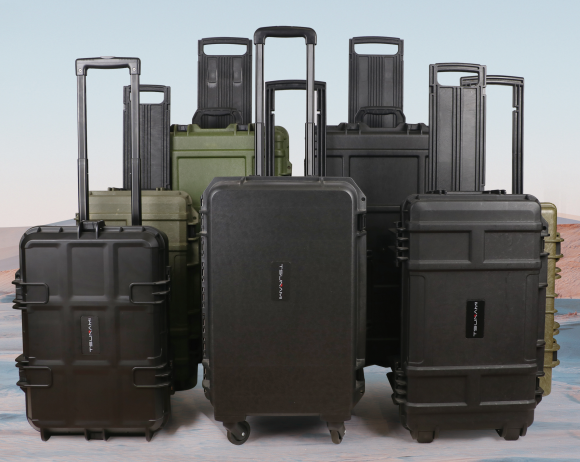
Wildlife photography is an endurance sport disguised as an art. You wait three days for one frame, then carry the result home on glass that costs more than most cars. A pro body, a 400mm or 600mm telephoto, a teleconverter, spare batteries, and a card wallet add up to years of investment — and every one of those pieces is fragile in precisely the ways the field is unforgiving.
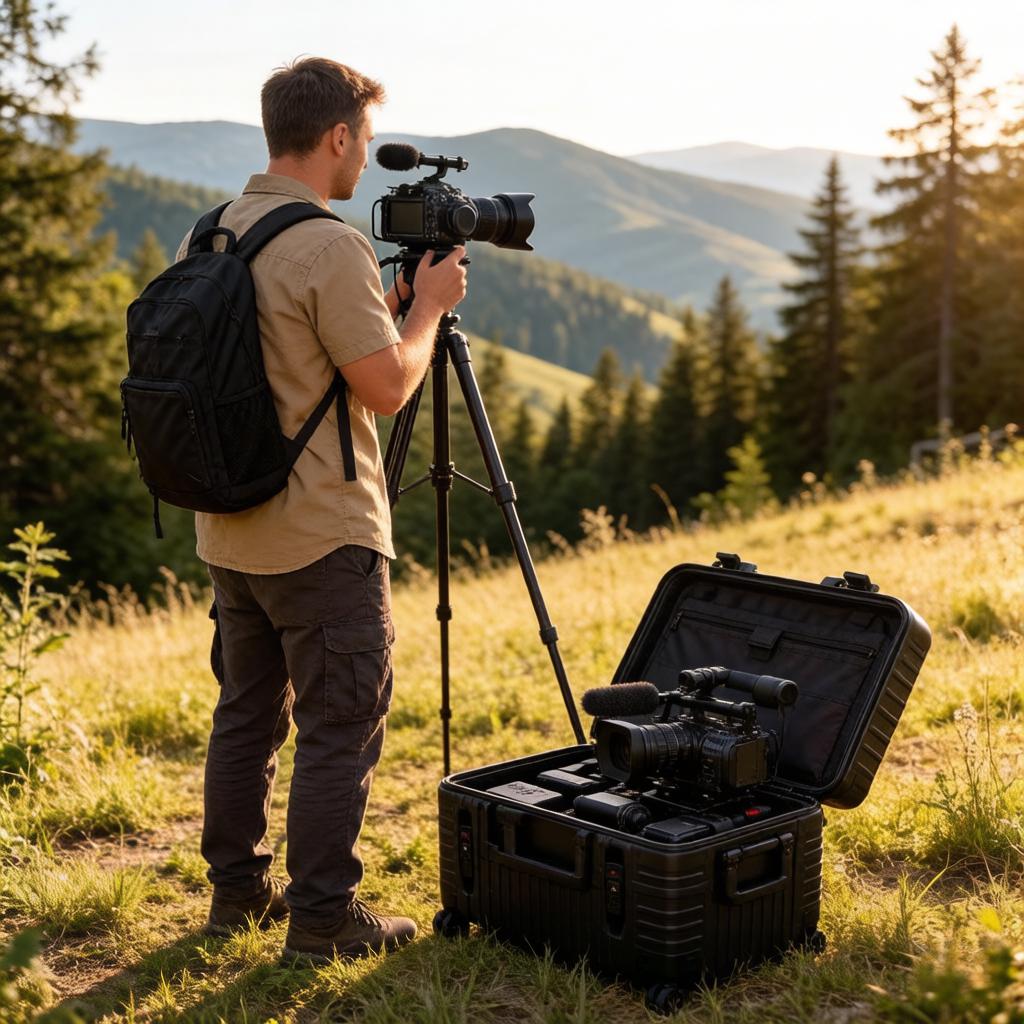
The locations that produce the best images are also the ones that destroy camera gear. Rainforest, savanna, coastal cliffs, high desert, alpine ridgelines — rain, humidity, dust, sand, salt spray, river crossings, and long hauls over rough ground all attack equipment engineered for a studio, not a swamp. That is why so many serious shooters move their kit into a hard-shell camera case instead of a padded soft bag. The backpack is comfortable. It is not a shield.
Why soft camera bags fall short in the field
Camera backpacks are built for carrying, not for surviving. In a studio or on a city shoot that is fine. On an expedition it becomes a liability, and the failures are predictable:
Impact. A stumble on uneven ground, a dropped bag, or the way an airline treats checked luggage sends shock straight through fabric padding into a lens barrel and its internal optics. Padding spreads a little force; it does not stop it.
Environmental intrusion. Thin fabric, unsealed zippers, and stitched seams are no defense against a rainforest downpour, fine desert dust, beach sand, or swamp humidity. Moisture or grit inside a lens is a repair bill, not a wrinkle.
Structural crush. Without a rigid shell, a bag compresses under heavier luggage in a truck bed or cargo hold — and whatever sits at the bottom takes the load.
Security. Zippers and soft panels cut easily. At a remote trailhead or a crowded terminal, that matters.
When a soft bag fails, the cost is not just the repair. It is the missed migration, the empty card, the trip that produced nothing. For a working photographer, it is also lost income.
What actually makes a case field-ready
Most hard cases look alike in a product photo. What separates them is material and construction.
Tsunami builds its protective cases from a glass fiber-reinforced polypropylene (PP + fiber) shell — a polymer chosen to flex and absorb impact rather than shatter under a sharp blow. The 443419 camera case and the 433015 camera case are rated to MIL-STD-810F/810G resistance against UV, solvents, corrosion, and fungus — the same conditions a rainforest or a salt-sprayed coastline produces. Reinforced walls, stainless-steel hardware, and molded hinges keep the structure intact trip after trip.
That is the difference between a box and a case: one holds your gear, the other absorbs what the journey does to it.
Two threats, one case: impact and environment
A field case has to answer both questions at once.
Impact. Long lenses are the most vulnerable thing you carry — a heavy barrel on a narrow mount, optics aligned to fractions of a millimeter. A hard shell takes the hit and disperses the force across the exterior; inside, PU foam, precision-cut or layered, holds the lens and body so they never meet the wall. The camera case with foam you choose is what prevents a shifted element or a cracked mount at the end of a rough transfer.
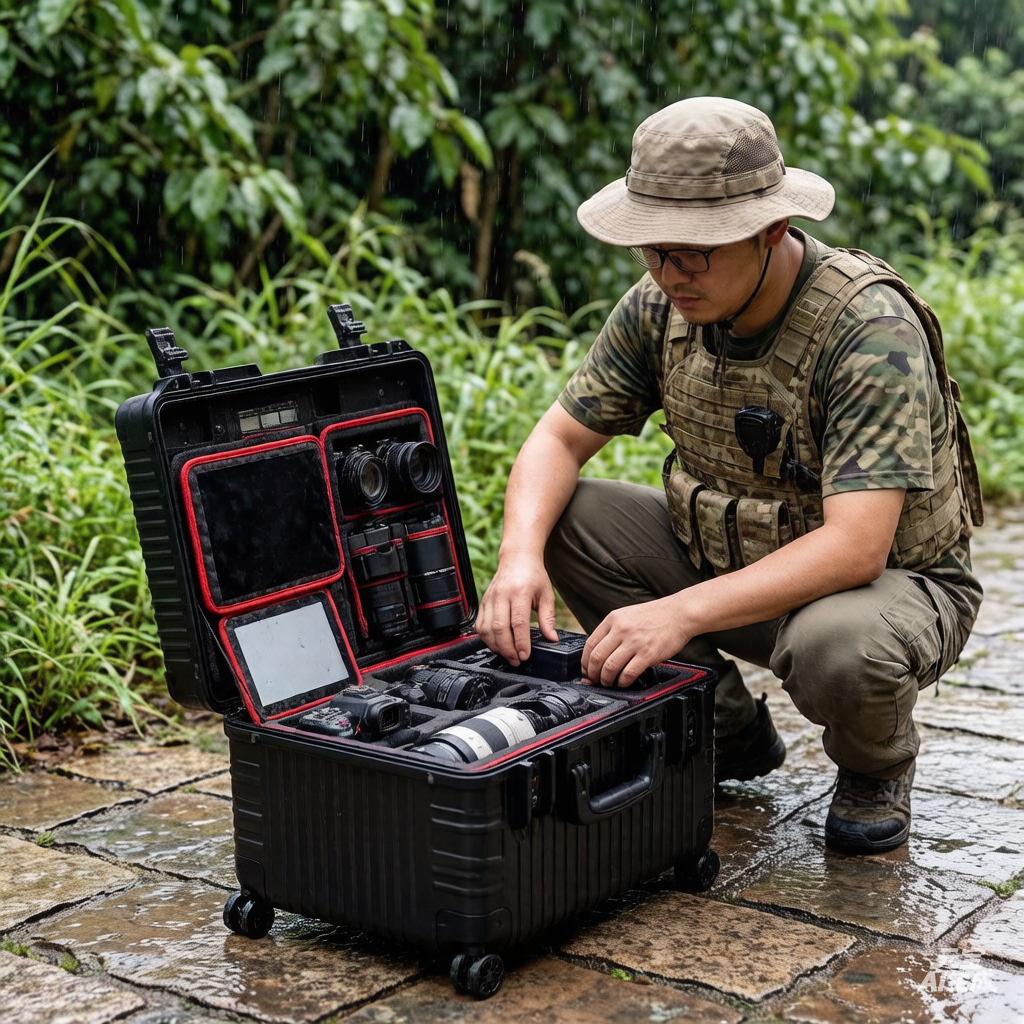
Environment. Wildlife work means weather. Tsunami’s camera cases use a continuous O-ring gasket plus an automatic pressure equalization valve, and the sealed models carry a certified IP67 waterproof case rating — dust-tight and submersible in 1 meter of water for 30 minutes. Sand, spray, mud, and a monsoon-season cargo hold stay outside. Where the spec is IP65 (the TAS-20 and the 433015), you get full dust-tightness plus protection against low-pressure water jets — plenty for rain and splashes, though not for full submersion.
Interiors: fixed foam or adjustable dividers
The exterior survives the journey; the interior decides whether your gear does. Tsunami offers both configurations, and the right one depends on how often your kit changes.
Precision-cut or pick-and-pluck foam — for a fixed kit. The 533120 travel case uses four foam layers; our large 744627 wheeled case ships with three layers of pre-scored PU foam plus an egg-crate lid liner. You pluck exact cutouts, so a body and a long lens sit immovable with zero rattle — the same principle that keeps precision instruments intact.
Adjustable divider inserts — for a kit that evolves. The 443419 takes custom divider inserts you can reconfigure as your equipment changes — one body and two lenses for a short trip, a different layout for a different assignment. For small accessories, the micro 161004 keeps cards, batteries, and filters organized.
Either way, the goal is the same: no empty space, no movement, no impact transfer.
Carry-on or checked: sizing the case to the journey
Air travel reshapes the whole problem, and wildlife shooters live on both sides of it.
Carry-on. The TAS-20 Photographer Carry-on is built for the gear you refuse to check: a 475 × 350 × 180 mm interior (29.9L) at just 3.5 kg, a top-opening lid for fast access, four spinner wheels, an aluminum multi-stage handle, layered modular compartments with EVA padding, and TSA locking latches. Its 577 × 400 × 200 mm exterior stays within carry-on limits.
Checked and expedition. The 533120 (530 × 310 × 200 mm, 32.8L, IP67, two silent wheels, retractable pull rod) and the rolling 512920 take a working kit through terminals and trails. For a full pro kit, the 744627 swallows 737 × 457 × 273 mm (91.9L) and rolls on four casters. For mixed drone-and-camera loads, the 584433 adds rugged wheels.
Every Tsunami hard case includes padlock holes that accept TSA-approved locks, so security can inspect a checked camera travel case without cutting hardware.
Sizing cheat sheet
| What you carry | Suggested case | Interior (L × W × D) | Seal |
| Body + 2–3 lenses, carry-on | TAS-20 | 475 × 350 × 180 mm | IP65 |
| Body + 3–4 lenses, divider layout | 443419 | 444.7 × 345.8 × 190 mm | IP67 |
| Body + telephoto + accessories | 533120 | 530 × 310 × 200 mm | IP67 |
| Full pro kit, checked | 744627 | 737 × 457 × 273 mm | IP67 |
| Small kit / accessories | 433015 | 421 × 292 × 139 mm | IP65 |
Durability you can count on
Investing in wildlife-grade glass calls for a case that lasts as long as the lenses do. Tsunami has manufactured waterproof, impact-resistant protective cases for over 17 years, from a 55,000 m² factory running 38 injection molding machines, more than 1,800 molds, and capacity above 1,200,000 pieces per month — ISO9001-certified and backed by 74 patents. Most Tsunami hard cases carry a lifetime warranty on the body; the TAS-20 carry-on luggage line is covered for one year.
FAQ
How do I transport a long telephoto lens safely?
Match the case’s interior to the lens with the hood reversed, then let foam or dividers hold the barrel along its length so it cannot pivot or slide. Support the barrel — not just the camera mount — so impact force never reaches the lens mount. A wheeled case also keeps a heavy rig off your back and off the ground.
Can I carry a hard camera case on a plane?
Yes — many photographers carry on a compact case like the TAS-20, and check a larger case with a TSA-accepted lock. Exterior dimensions matter: confirm your case fits your airline’s carry-on or checked-bag limits before you book.
Will foam hold moisture and cause mold in humid climates?
Closed-cell and layered PU foam does not absorb water the way open fabric does, and a sealed case with an O-ring gasket keeps ambient humidity out in the first place. Dry your gear before packing it, and let the case air out with the lid open after a wet trip so any trapped condensation can escape.
Foam or dividers — which is better?
Foam is a precise, immovable fit for a kit that never changes. Dividers suit a kit that evolves and want reconfiguring in seconds. Both protect equally well when they eliminate empty space.
Built for the wild, not the shelf
Your best images come from places that punish equipment. A hard-shell case is what lets you stand in those places without gambling your kit on a padded bag. From the carry-on TAS-20 to the rolling 744627, Tsunami builds camera cases around the reality of the field: shell rigidity, latch reliability, foam precision, and hardware that holds up for years.
Shop camera cases for wildlife, travel, and expedition work — or contact our team for a custom foam insert cut to your exact lens and body layout.
Bring the shot home.

At the end of the article, there is a large release of the latest e-catalogue. Identify the QR code to download the plastic hard cases latest e-catalogue. Don’t miss it ~
Scan the QR code below to get the latest e-catalogue ~
E-mail: info@tsunamicase.com
WhatApp:+8619128989453
website:https:www.tsunamicase.com
Post time: Sep-16-2026