
Keeping Camera Gear Safe on the Toughest Journeys: A Stage-by-Stage Guide to Hard-Case Protection
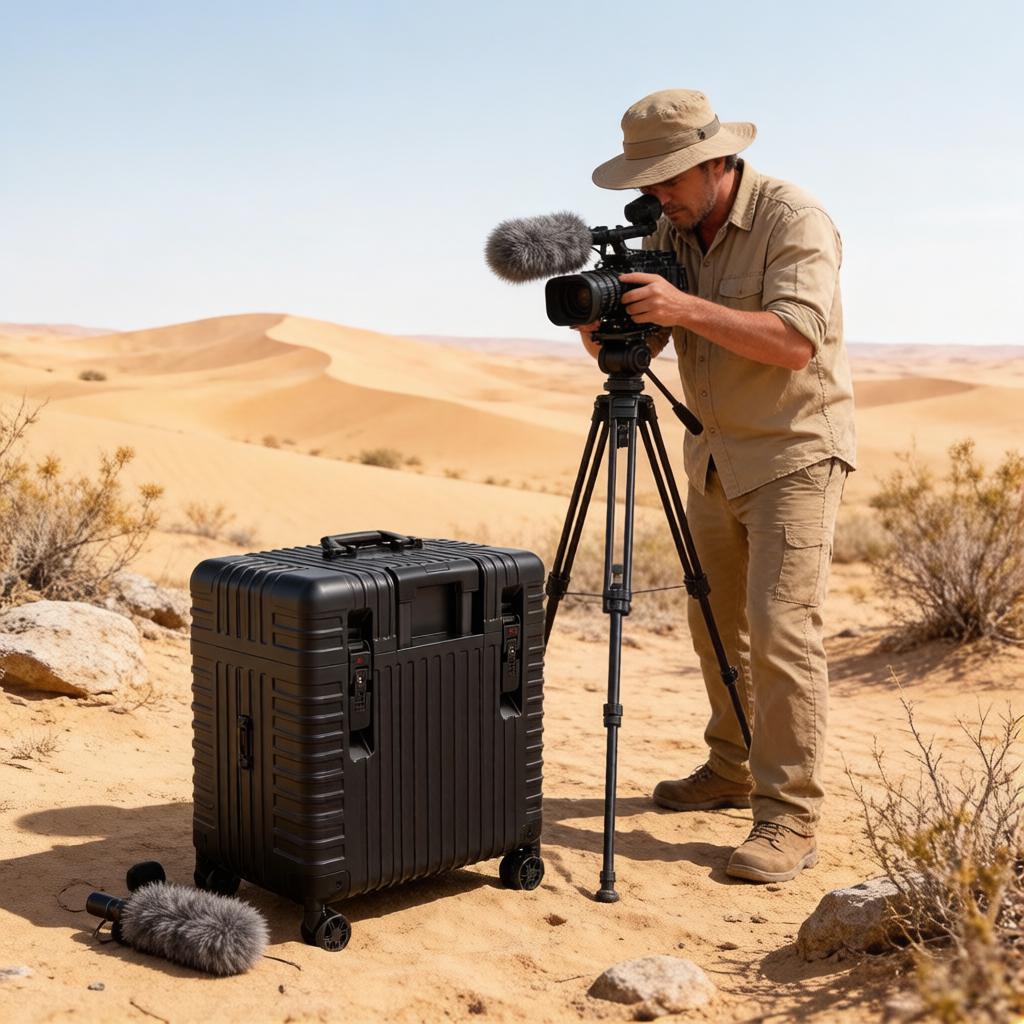
A camera kit rarely fails at home. It fails in the twelve hours between a hotel lobby and a ridge line — stacked under somebody else’s duffel, x-rayed twice, strapped to a truck bed, caught in a river crossing, then left overnight in a humid room. Each of those is a separate risk, and a soft bag answers only the easiest one.
Most protection advice treats a trip as a single event. It isn’t. A journey is a sequence of stages, and camera equipment can be lost at any of them. This guide walks the entire route — packing, cabin, checked baggage, ground transfer, weather, arrival — and shows what actually has to be true at each stage for a body, a set of lenses, and a fragile accessory kit to arrive working.
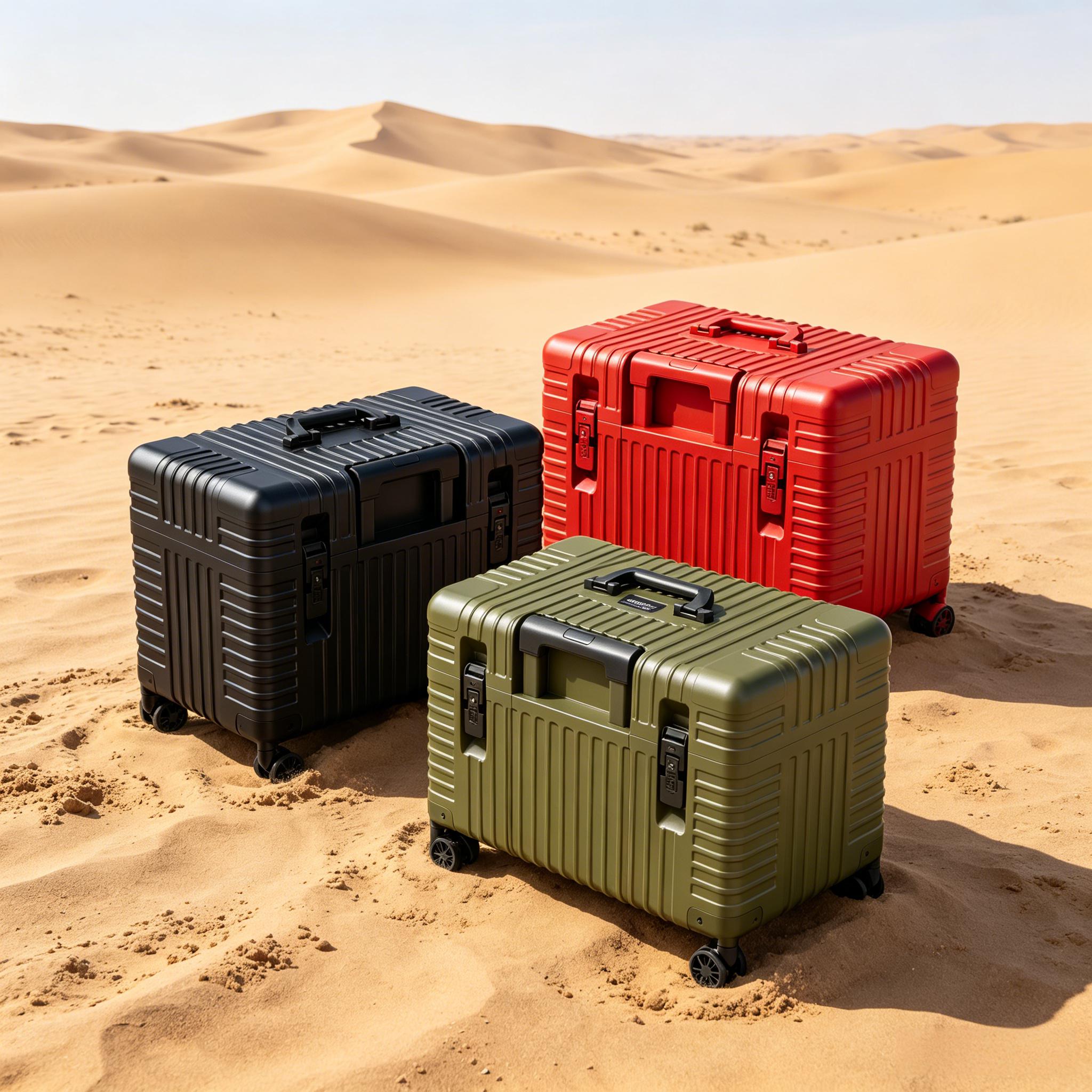
Stage 1 — Packing: the interior decides the outcome
Buy the shell and you have solved about half the problem. The other half is inside it.
Gear is damaged less by a single catastrophic blow than by movement: a lens that shifts a few millimetres on every turn of a conveyor, a body that pivots against a wall, a battery that rattles loose and shorts. The fix is not “more padding” — it is no dead space.
Tsunami interiors come in three configurations, and the right one depends on how often your kit changes:
Precision-cut, layered, or pick-and-pluck foam — for a fixed kit. The 533120 travel case uses four foam layers; our large 744627 wheeled case ships with three layers of pre-scored PU foam plus an egg-crate lid liner. You pluck exact cutouts, so a body and a long lens sit immovable and silent.
Reconfigurable divider inserts — for a kit that evolves. The 443419 camera case takes custom divider inserts you can rearrange between assignments without buying new foam.
A micro case for the loose ends. The 161004 keeps cards, batteries, and filters from migrating through the main case.
Stage 2 — The cabin: do the carry-on math before you book
The single most effective protection decision is not a material or a latch. It is where the case rides. Gear in the cabin cannot be lost, crushed, or routed to the wrong continent.
That makes exterior dimensions a specification, not a detail. The TAS-20 Photographer Carry-on measures 577 × 400 × 200 mm outside and 475 × 350 × 180 mm inside (29.9L) at 3.5 kg — sized to sit within carry-on limits rather than to maximise volume. A top-opening lid lets you reach a card or a battery without unpacking the interior, four spinner wheels roll it through a terminal, and TSA locking latches mean a security check does not become a negotiation.
Rule of thumb: carry on what you cannot replace on the road — bodies, cards, and the one lens you were hired to use. Check the rest in a hard case built for the hold.
Stage 3 — Checked baggage and security: locks, latches, and the case that survives handlers
Once a case is out of your hands, three things have to hold: the shell, the latches, and the lock.
A stack of luggage concentrates load on whatever sits at the bottom, so a rigid shell is what keeps that load away from your optics. Recessed latches resist snagging on conveyor belts and luggage carousels. And for security, every Tsunami hard case includes padlock points that accept TSA-accepted locks, so an inspector can open, examine, and re-secure the case without cutting hardware or damaging the shell.
If you check a full kit, size up: the 533120 carries 530 × 310 × 200 mm (32.8L), and our 744627 wheeled case takes 737 × 457 × 273 mm (91.9L) on four casters — enough for a body, several lenses, lighting, and audio.
Stage 4 — Ground transfer: crush, vibration, and rough roads
The most underrated leg is the one between the airport and the location: a van, a pickup bed, a boat, a mule. That is where vibration and stacking do their work, and where a case with no wheels becomes a liability because it gets dragged or thrown instead.
The 533120 pairs two wheels with a retractable pull rod — one case you can wheel through a terminal and lift into a truck.
The rolling 512920 is built for camera loads that live on the move.
For mixed drone-and-camera kits, the 584433 adds rugged wheels and a larger footprint.
Stage 5 — Weather: what IP67 actually promises
Rain, salt spray, desert dust, and the cold, damp air of a cargo hold are separate threats. Two numbers on the spec sheet tell you how well a case handles all four.
Decode IP67. The first digit rates protection against solids; the second rates water.
’6′ — dust-tight, the highest solids rating. Not “dust resistant”: no ingress of dust at all. Fine desert grit and road dust cannot reach your optics or electronics.
’7′ — temporary immersion. The case survives being submerged in 1 metre of water for 30 minutes without harmful effect. That covers a torrential downpour, a dunking at the water’s edge, and a case sitting in a flooded cargo container — it does not mean unlimited depth or duration.
The seal itself is a continuous O-ring gasket, and it pairs with an automatic pressure equalisation valve. That valve matters on every flight: as altitude changes, it gradually equalises internal pressure with the outside air so the case still opens easily on arrival while the seal stays watertight.
Where a case is rated IP65 (the TAS-20 and the 433015), you get full dust-tightness plus protection against low-pressure water jets — right for rain and splashes, not for submersion. On top of the ingress rating, the 443419 is certified to MIL-STD-810F and the 433015 to MIL-STD-810G resistance against UV, solvents, corrosion, and fungus — the conditions a salt-sprayed coastline or a humid monsoon season actually produces.
Stage 6 — Arrival: drying, storage, and reconfiguring
The journey ends, but the risk doesn’t. A case that spent two days in the rain, opened in a warm room, is a humidity trap.
Dry gear before it goes in. Pack damp equipment and you have sealed moisture in with your optics.
Air the case after a wet trip. Leave the lid open in a dry space so trapped condensation can escape.
Use closed-cell foam. It doesn’t absorb water the way open fabric does, so it won’t turn into a sponge.
Reconfigure before you repack. With a divider system like the 443419, you can reset the interior to the next job in seconds rather than ordering new foam.
The journey checklist
|
Stage |
The risk |
What has to be true |
Tsunami models |
|
Packing |
Gear shifts, rattles, strikes the wall |
No dead space; interior cut or divided to the kit |
443419, 533120, 161004 |
|
Cabin |
Irreplaceable gear in the hold |
Fits carry-on limits; fast access |
TAS-20 |
|
Checked |
Handlers, security, stacking |
Rigid shell; TSA-accepted lock points |
744627, 533120 |
|
Ground |
Crush, vibration, rough roads |
Wheels plus shell rigidity |
533120, 512920, 584433 |
|
Weather |
Rain, dust, spray, pressure change |
Certified IP67 or IP65 seal plus pressure valve |
443419, 533120, 744627 |
|
Arrival |
Humidity, mould, a changed kit |
Closed-cell foam; air-dry; reconfigurable dividers |
443419, 433015 |
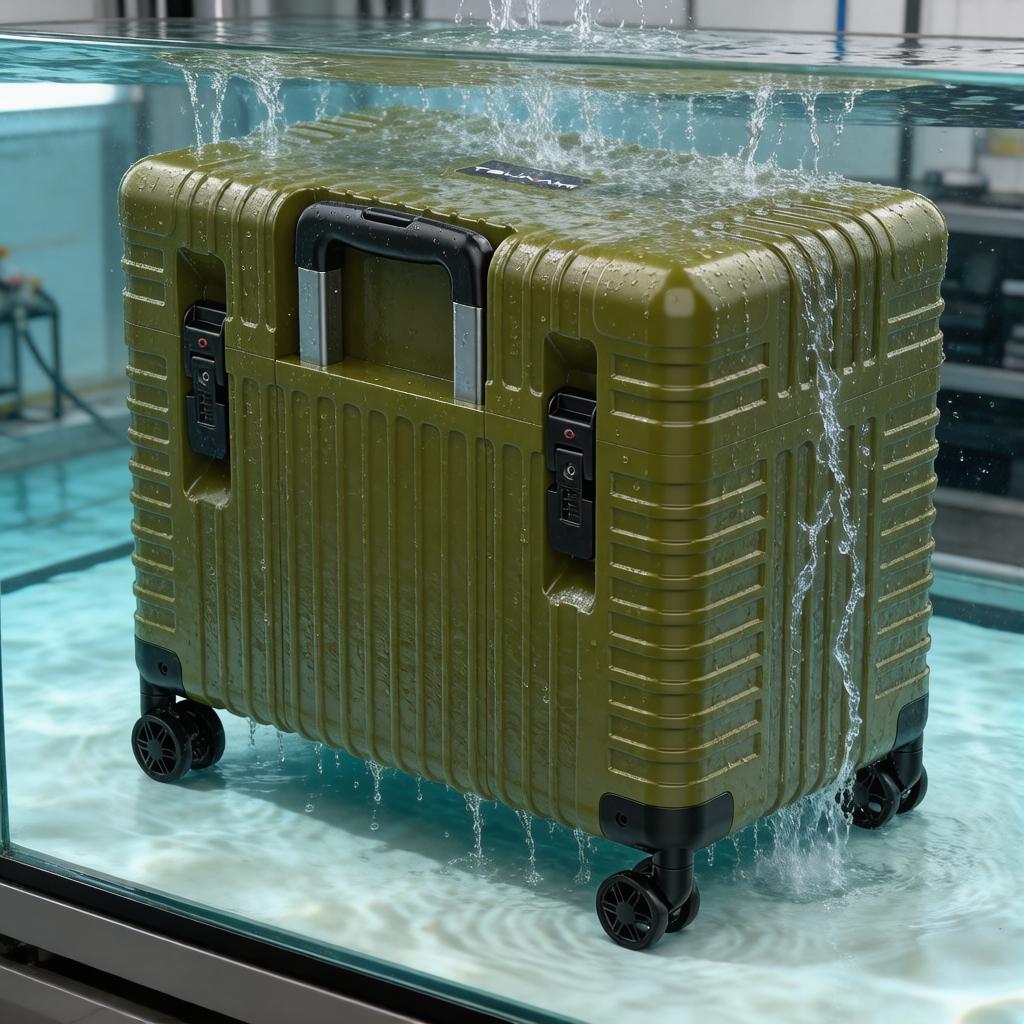
Airline carry-on and fee avoidance: four rules that save money
1. Check weight as well as size. Many carriers cap carry-on at roughly 7–10 kg, and a loaded camera case gets heavy fast.
2. Use your personal item as overflow. A backpack for laptop, papers, and light accessories spreads the weight and keeps essentials reachable.
3. Weigh the loaded case before you leave. A kitchen scale at home beats a surcharge at the gate.
4. Don’t check what you can’t replace. If the shoot depends on it, it flies with you.
Why Tsunami cases for camera gear
Certified protection, not marketing language. Selected models carry IP67 sealing and MIL-STD-810F/810G environmental resistance.
Sealed and pressure-equalised. A continuous O-ring gasket plus an automatic equalisation valve keeps water out and the lid openable after a flight.
Built for handling. Recessed latches, moulded hinges, stainless-steel hardware, and TSA-accepted padlock points.
Interiors that fit your kit. Pick-and-pluck and layered foam, or reconfigurable divider inserts.
Manufactured at scale, backed for the long haul. Tsunami has built waterproof, impact-resistant protective cases for over 17 years, from a 55,000 m² factory running 38 injection moulding machines, more than 1,800 moulds, and capacity above 1,200,000 pieces per month — ISO9001-certified with 74 patents. Most Tsunami hard cases carry a lifetime warranty on the body; the TAS-20 carry-on luggage line is covered for one year.
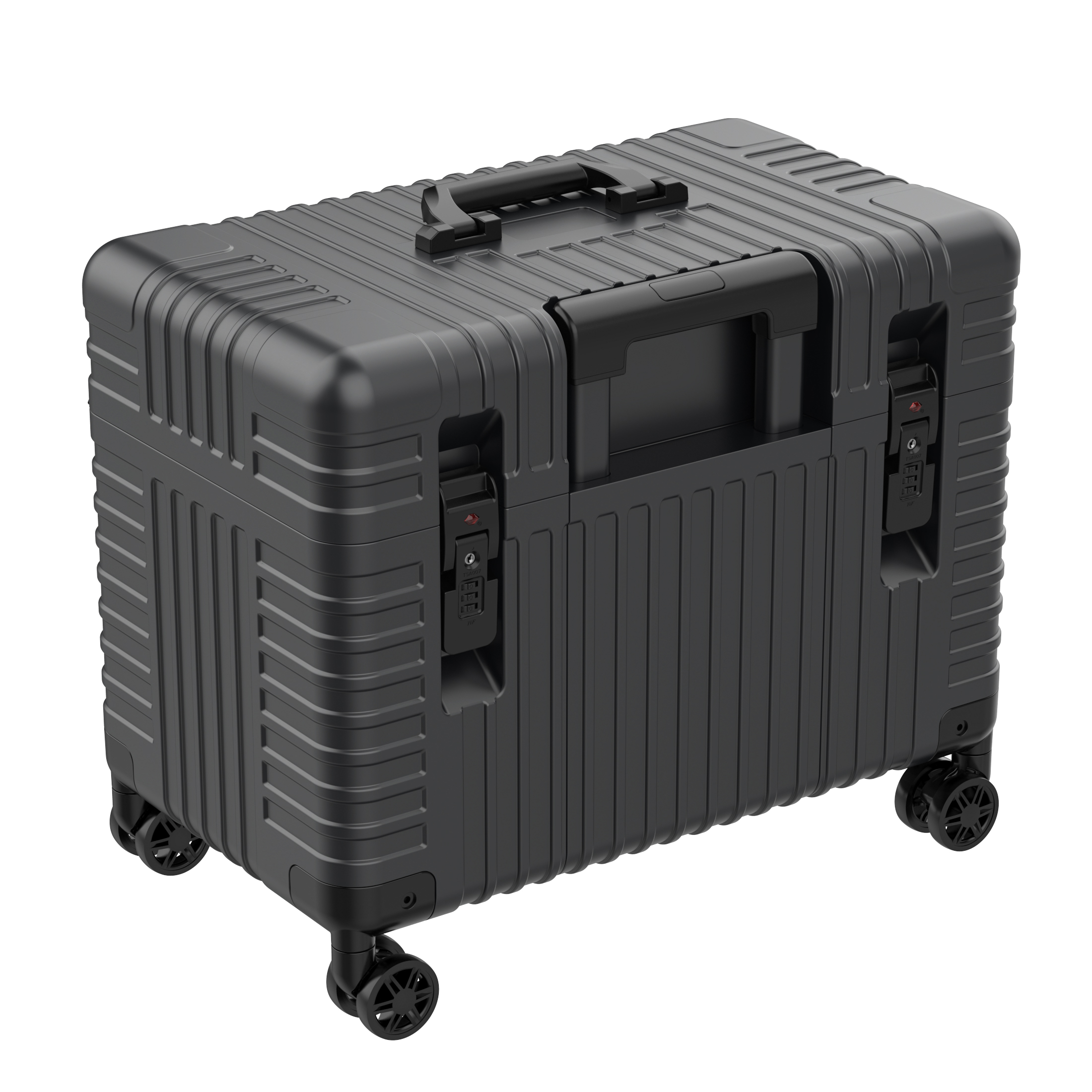
FAQ
What does IP67 actually mean for a camera case?
The ’6′ means dust-tight — the highest solids rating, so no dust ingress at all. The ’7′ means the case survives temporary immersion in 1 metre of water for 30 minutes. It is a real, testable standard, but it is not a claim of unlimited depth or duration.
Is it safer to carry on or to check a hard camera case?
Carry-on is safer for gear you cannot replace, because the case never leaves your control. Check a hard case with TSA-accepted locks when the kit is too large for the cabin — a rigid shell, a working latch, and a lock are what make checking a calculated risk rather than a gamble.
Will foam trap moisture and grow mould?
Closed-cell and layered PU foam does not absorb water the way open fabric does, and a sealed case with an O-ring gasket keeps ambient humidity out in the first place. The real cause of mould is packing damp gear — dry it first, and air the case open after a wet trip.
How do I stop a lens from shifting inside the case?
Remove every empty gap. Either pluck foam to the exact profile of the body and lens with the hood reversed, or build dividers that cradle the barrel along its length. Support the barrel rather than the camera mount, so impact force never travels through the lens mount.
Can a hard camera case be wheeled on rough ground?
Yes — choose a model with casters and a rigid shell, such as the 533120 or the rolling 512920. Wheels keep a heavy kit off your back and off the ground, which is where most vibration damage happens on the ground-transfer leg.
Get your kit there intact
Your best work happens in places that punish equipment. A hard-shell case is what lets you stand in those places without betting the kit on a padded bag. From the carry-on TAS-20 to the rolling 744627, Tsunami builds camera cases around the reality of the journey: shell rigidity, latch reliability, seal integrity, and interiors that leave nothing free to move.
Shop camera cases — or contact our team for a custom foam insert cut to your exact body and lens layout.
Pack it once. Arrive ready.

At the end of the article, there is a large release of the latest e-catalogue. Identify the QR code to download the plastic hard cases latest e-catalogue. Don’t miss it ~
Scan the QR code below to get the latest e-catalogue ~
E-mail: info@tsunamicase.com
WhatApp:+8619128989453
website:https:www.tsunamicase.com
Post time: Sep-22-2026