
How to Prevent Equipment Damage During Shipping and Travel
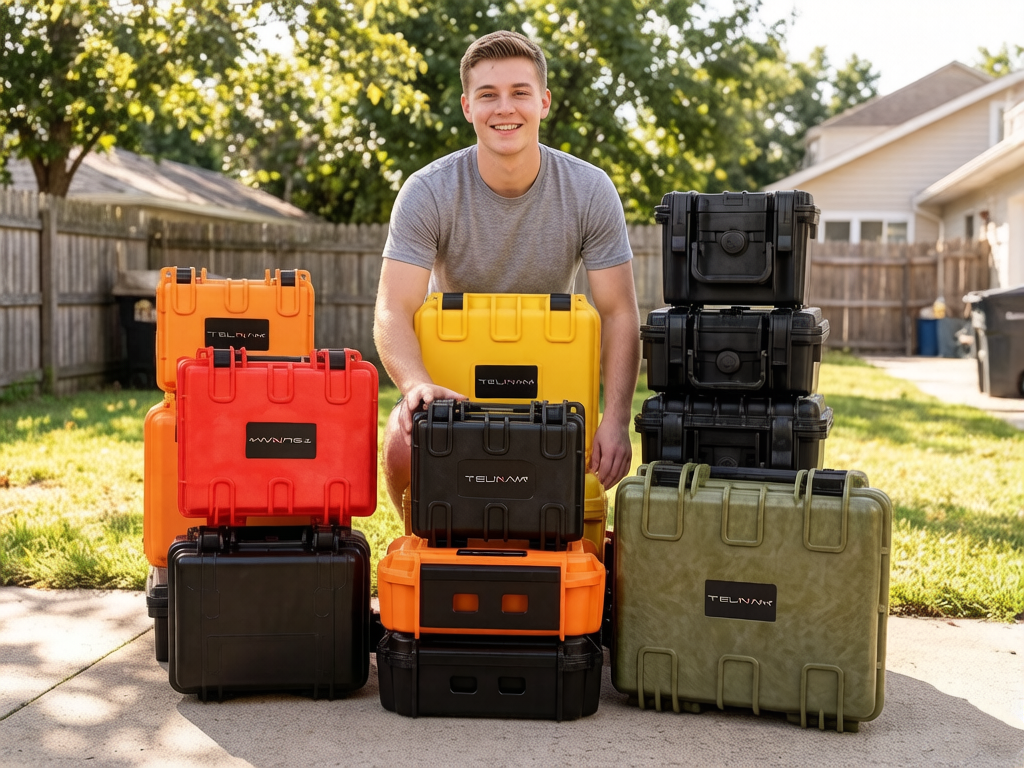
In 2024, U.S. airlines mishandled about 2.72 million checked bags on domestic flights — including bags that were lost, damaged, delayed, or pilfered, according to the U.S. Bureau of Transportation Statistics. For professionals traveling with cameras, lenses, precision instruments, or tool kits, that risk makes a proper protective case more than a convenience. It is the first line of defense.
Carriers drop cases. Baggage handlers stack them. Freight shifts in transit. If your equipment setup cannot withstand those conditions, you will eventually pay the price.
Most equipment damage during shipping and travel comes down to seven specific, fixable mistakes.
What Causes Equipment Damage During Shipping and Travel?
Damage rarely comes from a single catastrophic event. More often, it is repeated rough handling, stacking pressure, vibration over long distances, moisture intrusion, and poor packing decisions that allow movement inside the case. Carriers move thousands of packages daily, and individual items do not get special treatment. Your gear needs to survive whatever the real world throws at it.
Why Equipment Damage Costs More Than You Think
The purchase price of a protective case is clearly shown on an invoice. The cost of damaged gear is harder to quantify until it happens. Beyond repair or replacement, there is lost time, emergency rentals when a job cannot wait, and damage to credibility when gear fails at a critical moment. The right case is not a cost. It is insurance.
1. Your Case Was Not Built for Shipping Conditions
A case designed for storage or local transport often lacks the structural integrity to survive airline cargo holds, freight pallets, or courier handling. Weak latches, thin shells, and minimal impact resistance become points of failure under real transit stress.
Tsunami builds its heavy-duty waterproof hard cases with this in mind. Injection-molded models like the 272017 use impact-resistant engineered polymer with reinforced corners and molded stacking ridges, while roto-molded models like the R735340 and R534338 add extra wall thickness for the kind of abuse that happens on freight pallets. These are shipping cases, not storage boxes.
2. Your Equipment Is Moving Inside the Case
Empty space inside a case is not neutral. It is a liability. When gear is not held in place by properly fitted foam or inserts, it shifts during transit, causing impact damage, scratches, and broken connections. A camera lens rolling against a camera body. A loose accessory grinding against a polished surface. These are predictable outcomes of an interior that was not configured for the gear inside it.
Tsunami cases ship with customizable foam inserts, and our heavy-duty models accept CNC-cut foam shaped to your exact equipment layout. The 443419 camera case comes with adjustable divider inserts, and our pick-and-pluck kits use three layers of pre-scored PU foam plus an egg-crate lid liner. Every component stays exactly where it belongs, from departure to arrival.
3. You Chose the Wrong Case Size
A case that is too large gives gear room to shift. A case that is too small creates pressure points that can crack, bend, or compress components. The right case fits the gear with enough clearance for foam or padding — but no excess space and no unnecessary compression.
Tsunami covers the full sizing spectrum: micro cases like the 161004 for small instruments, the TAS-20 for carry-on photography gear, mid-size tool cases like the 332317, and large wheeled cases like the 584433 and 483720 for full kits. Choose the size that matches the gear — not the other way around.
4. You Are Using Soft Cases for High-Risk Travel
Soft cases have their place for short local trips where portability is the priority. But for airline checked luggage, freight shipping, or any environment where stacking and compression are likely, soft cases do not offer sufficient protection. They compress under weight, absorb impacts poorly, and offer little resistance to rough handling.
Tsunami’s hard-shell lineup — from the 564320 lightweight hard case to the 443419 camera case with divider inserts — gives professionals a purpose-built hard option for exactly those conditions.
5. Your Case Is Not Sealed Against Water and Dust
Cargo holds can be wet. Loading docks expose cases to rain. Equipment shipped across regions encounters humidity shifts that cause condensation inside an unsealed case. Dust intrusion affects sensitive electronics and mechanical components in ways that accumulate over time.
Tsunami cases are built around a continuous O-ring gasket compressed by heavy-duty draw latches, with ratings that are certified, not claimed: the 332317 outdoor tool case and the flagship 744627 are IP67-certified (submersible and dust-tight), while the 322505 laptop and tablet case is IP65-rated for splash and dust resistance. For any field environment where exposure is a real possibility, the seal is already done.
6. You Are Not Securing Equipment Properly Before Transit
Even the right case cannot compensate for poor packing. Loose cables act like sandpaper against polished surfaces. Missing padding around fragile connectors and edges creates concentrated impact points. Improperly latched cases can open under stacking pressure. What happens before the lid closes matters as much as the case itself.
Secure every loose accessory, wrap sharp edges, and snap every latch. Padlock-ready stainless steel hasps on our heavy-duty models mean a properly closed case stays closed — and can be locked — through the entire journey.
7. Environmental Conditions Are Being Ignored
Temperature changes during flight affect electronics in ways that are not visible until something fails. Pressure changes in cargo holds stress sealed enclosures — which is why Tsunami cases include an automatic pressure equalization valve that balances internal and external pressure during altitude changes, preventing vacuum lock and seal stress. Humidity and condensation are real risks for gear crossing climates, and long-distance freight means extended vibration that gradually loosens connections over time. A case that manages pressure is a case that arrives intact.
A Quick Pre-Transit Checklist
Confirm the case is properly sized for the gear inside, since excess space causes shifting that leads to impact damage before you even reach your destination.
Eliminate internal movement with foam or custom inserts, because loose components grinding against each other are one of the most common and preventable causes of surface and structural damage in transit.
Secure all loose accessories, cables, and detachable parts before closing the lid — anything that can move will move, and movement means contact damage over a long haul.
Verify that all latches are fully closed and locked, because an improperly secured lid can open under stacking pressure or rough handling, exposing your gear to direct impact.
Inspect all case seals and gaskets for debris or damage before travel, since even a small gap can allow moisture and dust to reach sensitive components.
Label the exterior with contact information and orientation indicators so handlers can treat the case correctly throughout its journey.
Inspect the case on arrival before unpacking and document any external damage immediately in case a carrier claim needs to be filed.
What Type of Case Protects Equipment Best During Shipping?
The answer comes down to four things: a hard shell with genuine impact resistance, foam customization that holds gear in a precise fit, a waterproof and dustproof seal, and latching hardware that stays closed under real transit loads. Storage-grade and soft cases address one or two of those requirements at best. Tsunami cases are designed with all four in mind — used by photographers, drone operators, field technicians, and military contractors who ship regularly and cannot afford to get it wrong.
Why Professionals Trust Tsunami Cases for Shipping and Travel
Guangzhou Tsunami Industrial Equipment has been building protective cases since 2013, and every case in our lineup is designed around the reality of what happens to gear in transit. Our factory runs 30 injection molding machines and 1,500 molds, producing everything from micro equipment cases to large roto-molded military cases. Our cases protect photographers on location, drone pilots in the field, technicians on job sites, and defense contractors moving sensitive equipment between deployments — with certified IP65/IP67 sealing on the models that need it.
And when your needs are specific, Tsunami offers ODM/OEM/OBM customization: custom foam layouts, colors, logos, and packaging, so your case protects your gear and carries your brand.
When your equipment needs to get there intact, find the right protective case for your shipping and travel needs at tsunamicase.com.

At the end of the article, there is a large release of the latest e-catalogue. Identify the QR code to download the plastic hard cases latest e-catalogue. Don’t miss it ~
Scan the QR code below to get the latest e-catalogue ~
E-mail: info@tsunamicase.com
WhatApp:+8619128989453
website:https:www.tsunamicase.com
Post time: Aug-10-2026