
Choosing a Crossbow Case: Soft, Semi-Rigid, or Hard — and Which One Your Hunt Needs
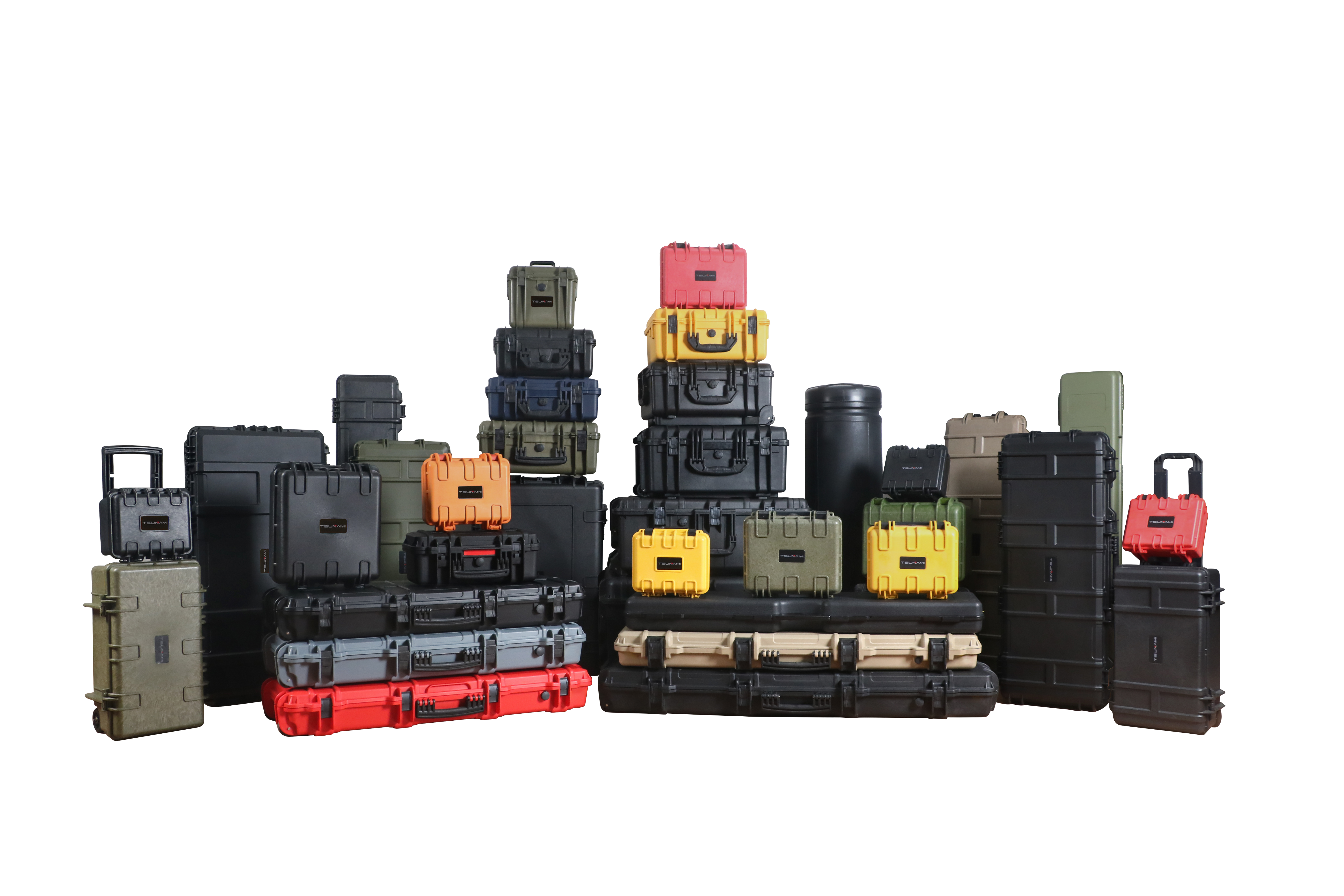
A scoped crossbow is the most expensive thing most hunters carry into the woods. Add a rangefinding optic, a quiver, a cocking aid and a dozen bolts, and the rig on your shoulder can run into four figures. Then most of us buy the case last — and buy it on price.
That is the wrong order. The case is the one piece of kit whose entire job is to protect everything else, and it is the cheapest part of the setup. What follows is a practical way to choose one: the three classes of case you can buy, the three jobs a case actually has to do, and the construction details that decide whether it survives a season or a decade.
The three tiers of crossbow case
Crossbow cases fall into three groups, and they are not simply cheap, mid-priced and expensive versions of the same thing. Each is a different set of trade-offs.
| Feature | Soft case | Semi-rigid case | Hard case |
| What it is | Nylon or canvas shell, foam or fleece lining | Rigid panels or a frame inside a fabric shell | Injection-moulded shell with a gasket seal |
| Handles well | Dust, light rain, scratches, short trips | Range trips, truck transport, occasional knocks | Stacking, drops, crush, rain, dust, immersion |
| Fails at | Impact, crush, water ingress, theft | Heavy stacking loads, submersion, long-haul air travel | Nothing much — the cost is size and weight |
| Lockable | Usually not | Sometimes, via a fabric tab | Yes — moulded padlock holes |
If your bow never leaves the truck bed and never sees a downpour, a soft case does the job at the lowest price. The moment a case has to ride at the bottom of a luggage stack, sit in a humid garage for six months, or survive the hold of an aircraft, the arithmetic shifts toward a rigid shell. Straight-sided hard cases also stack and store without collapsing, which matters more than most people expect.
The middle path: building your own semi-rigid case
If budget is the binding constraint and you are not flying, you can build most of a semi-rigid case yourself. Start with a rigid plastic trunk or tote that is longer and deeper than your bow, then line it with closed-cell foam blocks cut to the shape of the limbs, rail and stock. The goal is the same as a factory case: block every direction of movement, and keep the string, cams and optic from contacting anything hard.
Be clear-eyed about what you give up. There is no perimeter gasket, so nothing stops a downpour, ground water or a humid garage. There are no moulded padlock holes. There is no pressure-equalisation valve, so an aircraft hold can leave the lid hard to open. And there is no certified crush, drop or immersion rating behind the box. A home build is a reasonable range case and a poor airline case — which is exactly the line it should be judged on.
Match the case to the job
Storing the bow between seasons
Off-season storage is not a passive activity. A shed or garage swings in temperature, holds humidity, collects dust, and — if the case is on the floor — invites something to be stacked on top of it. What matters here is a sealed lid, dust resistance, and a shell rigid enough to take a load without flexing onto the bow.
The road to the range or the lease
Vibration is the quiet one. A case that slides around a truck bed for an hour transfers every bump into whatever is moving inside, and a scope that shifts a fraction of a millimetre will not hold zero. What matters is foam that holds the bow and optic immovably, with no rattle and no empty gaps.
Flying to a hunt
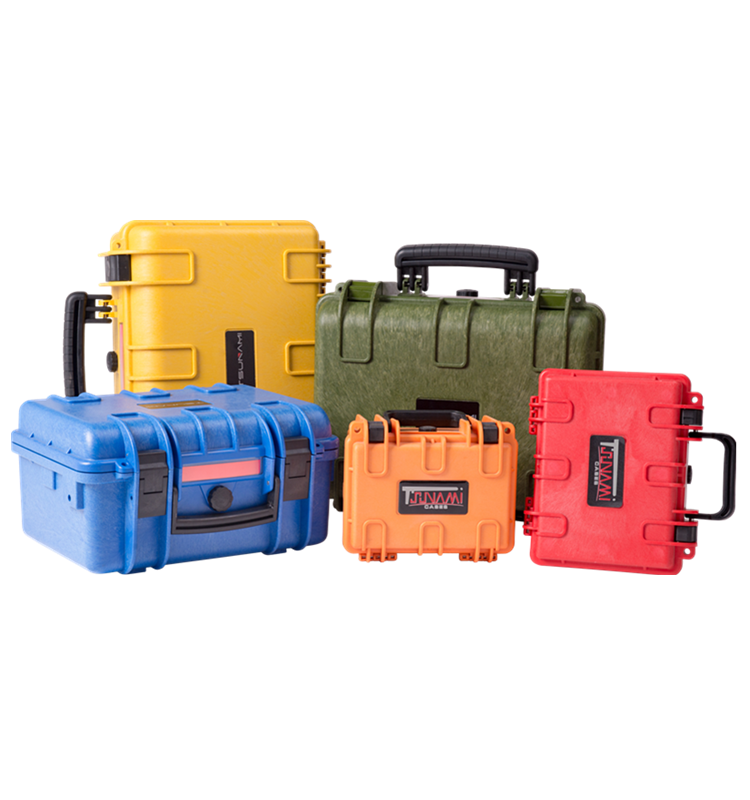
This is the strictest scenario. TSA permits bows and crossbows in checked baggage, and airlines expect sporting equipment to travel in hard-sided cases — damage claims for soft-sided sporting gear are routinely denied. What matters: a rigid shell, moulded padlock holes that accept locks with 7 mm shackles, and a pressure-equalisation valve so the case still opens when you land.
Measure three numbers before you buy
Almost every “will it fit?” problem traces back to one mistake: measuring the bow instead of the loaded bow.
1. Overall length. Measure tip to tip as the bow sits ready to hunt. If the limbs detach, also measure the longest single component — that is the number your case has to clear.
2. Total height with the optic mounted. A tall rangefinding sight adds real depth, and this is the measurement people forget. It is why a bow that “obviously fits” in a spec drawing sits proud of the foam in reality.
3. Accessory volume. Quiver, bolts, cocking aid, spare string, tools. Accessories are what turn a snug case into a crammed one.
Then map those numbers to interior dimensions:
| Your load | Suggested model | Interior (L × W × D) | Volume | Foam | Weight (with foam) |
| Compact crossbow or compound bow, minimal accessories | B85 | 865 × 300 × 124 mm | 32.2 L | 1 layer (egg foam) | 2.7 kg |
| Full-size crossbow with a tall optic | B120 | 1210 × 228 × 102 mm | 28.1 L | 2 layers | 2.9 kg |
| Full-size crossbow plus quiver, bolts and tools | B136 | 1370 × 300 × 120 mm | 49.3 L | 2 layers | 4.1 kg |
Read the width and depth columns as carefully as the length. The B120 is the long, slim option — it clears most full-size bows but leaves less room for a quiver than the numbers alone suggest. The B136 buys roughly 21 litres of extra volume and an extra 45 mm of depth over the B120, which is what makes room for a mounted optic plus accessories without crowding the limbs. The B85 is the lightest of the three and carries long items up to 850 mm in a shorter, wider cavity. Every model also lists lid and bottom depth separately, so you can check that a mounted scope has clearance above and below.
Six details that separate a hard case from a plastic box
1. Shell material. Tsunami shells are polypropylene reinforced with glass fibre (PP + fiber) — a polymer chosen to flex and absorb impact rather than shatter under a sharp blow, and one that stays stable in UV.
2. A real perimeter seal. A rubber O-ring running the full length of the lid is the difference between “dustproof” and “a gap with a lip”. The B120 and B136 both carry IP67 certification documents — dust-tight and rated for temporary immersion in 1 metre of water for 30 minutes, not merely splash-resistant.
3. Moulded structure. The shell, hinges and pin points are moulded into the case with stainless-steel hardware, which removes the separate attached hinge that tends to fail first on cheaper boxes.
4. Latches that stay shut. The B85 closes with two sliding-type latches; the B120 and B136 each close with two latches. Fewer, stronger latches beat a long row of weak ones.
5. Padlock holes sized for real locks. All three models have 7 mm padlock holes and TSA-standard hardware, so you can lock the case for travel without drilling into it. A matching TSA-approved case lock fits the same aperture.
6. Foam you can shape — or have shaped. The B85 ships with a single layer of pick-and-pluck egg foam; the B120 and B136 with two layers. If your bow has an unusual profile — an unusually tall optic, an offset quiver mount, non-standard limb geometry — Tsunami cuts custom inserts to your measurements, with samples turned around in about two weeks.
One caution worth reading before you buy: temperature ratings differ by model. The B85 is rated -10°C to 60°C, while the B120 is rated -40°C to 90°C. If you hunt in deep winter or leave a case in a hot vehicle, check the spec sheet for the model you are considering rather than assuming one rating covers the range.
FAQ
Do I really need a hard case for a crossbow?
If the bow travels by air, lives in a truck or shed, or carries an optic worth more than most rifles, yes. A hard case is the only category that resists crushing, keeps water and dust out through a gasket, and can be locked. For a bow that only goes from the house to a nearby stand, a soft case is a defensible choice.
What size crossbow case do I need?
Match the interior to the longest single component of your bow, then add the height of the mounted optic. As a rough guide: bows up to about 850 mm with minimal accessories fit the B85; a full-size bow with a tall sight suits the long, slim B120; a full-size bow travelling with a quiver, bolts and tools needs the volume of the B136.
Can I fly with my crossbow in a hard case?
Yes. TSA permits bows and crossbows in checked baggage, and most airlines require sporting equipment to be in a hard-sided case. Use a case with moulded padlock holes and a TSA-accepted lock so the case can be inspected and re-secured without damage, and confirm your specific airline’s policy before you book.
Does a crossbow case need to be waterproof?
“Waterproof” is not a single thing. A perimeter gasket plus a dust certificate covers rain, spray and dust, which is what most hunters actually face. An IP67 rating goes further — dust-tight and rated for temporary immersion — which matters if the case rides on an open trailer, a boat or a float plane.
Can I get foam cut for my exact crossbow model?
Yes. Tsunami cuts custom foam inserts from your measurements or a foam drawing, which is how a tall optic or an awkward limb angle gets a proper fit instead of a loose one. Standard cases are normally in stock; logo samples run about a week, and custom inserts about two weeks.
Built to outlast the bow
Your crossbow will be replaced before a good hard case is. Tsunami has manufactured waterproof, impact-resistant protective cases for over 17 years, and its factory — relocated to a larger site in 2019 — now spans more than 55,000 m², running 38 injection-moulding machines from 90 to 2,000 tonnes, over 1,800 mould sets, and capacity above 1,200,000 pieces per month. The company is ISO9001-certified, holds 74 patents, 15 software copyrights and 6 authentication certificates, and backs the body of every hard case with a limited lifetime warranty.
Shop bow and crossbow cases — or contact our team with your three measurements and we will tell you which cavity fits.
Measure the bow. Then choose the case.
At the end of the article, there is a large release of the latest e-catalogue. Identify the QR code to download the plastic hard cases latest e-catalogue. Don’t miss it ~
Scan the QR code below to get the latest e-catalogue ~
E-mail: info@tsunamicase.com
WhatApp:+8619128989453
website:https:www.tsunamicase.com
Post time: Oct-07-2026